Notes from the install team at Smart Safety Power of Realtime Biometrics, Delhi NCR.
Most people call us asking for a price first. Fair enough. But the price only makes sense once you know which machine fits your office, and that depends on three boring things: how many people walk in, what the floor is like, and whether your internet drops.
There are three ways a machine can read a person. Fingerprint, face, or a card or tag they carry. Each suits a different kind of office, and picking the wrong one is the most common reason a system ends up gathering dust on a wall.
Fingerprint, face, or card: what each one does
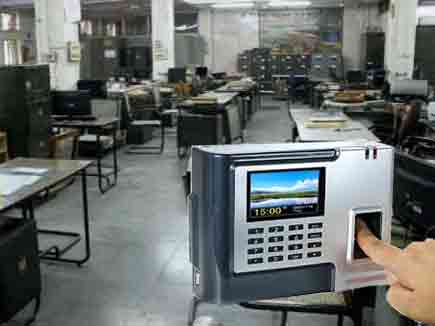
A fingerprint machine reads the ridge pattern on a finger and matches it. It is the cheapest reliable option and has been the default in Indian offices for years. The person has to put a finger on the sensor, so nobody can mark a friend present.
A face recognition machine reads the geometry of a face and confirms a match in well under a second. Nobody touches anything. This is the option most new offices in Noida and Gurgaon ask for now, and the shift sped up after Covid when people stopped wanting to share a sensor.
A card or RFID reader checks a tag, not a person. It is fast and cheap, but it carries the old problem built in: one person can hold five cards. We sell card readers and they work well for doors, but for attendance on their own they bring back the exact issue you are trying to remove.
To put a number on the bigger picture, research firms like Renub and IMARC valued the India biometrics market at roughly 2.8 billion US dollars in 2024, growing around 11 to 12 percent a year. Face recognition is the part growing fastest. That matches what we see on demo visits.
Where fingerprint still wins
Fingerprint is not outdated. For a normal office with staff at desks, it is accurate and cheap, and it lasts.
It struggles on the factory floor and in some trades. If your workers handle cement or oil, or their hands are cut from the work, the sensor will reject good fingers and your supervisor will spend the morning re-trying punches. We have seen this in manufacturing units near Faridabad. If that is your workforce, do not fight it. Move to face.
Where face recognition makes more sense
Face suits high traffic entries, factories, hospitals, and anywhere hygiene matters. People walk past, the machine reads them, the queue keeps moving. No finger to clean between two hundred people.
Two things to ask before you trust a face machine. One, does it have liveness detection, so a photo on a phone screen cannot fool it. Quality machines do; cheap ones often do not. Two, how does it behave in your actual lighting. A machine that works in a showroom can struggle against a glass door with the afternoon sun behind people. We test this on site, which is the whole point of a demo.
The card reader question
Use cards for doors, not for attendance honesty. If you want one device that records attendance and also opens a secured door, that is a real setup and we configure it often. The attendance still runs on fingerprint or face. The card just handles the lock. Putting both jobs on one machine saves money and wall space.
What to check before you buy
This is the part sellers skip because it is not on the spec sheet.
The sensor matters more than the body. A pretty machine with a weak optical sensor will reject fingers in winter when skin is dry. Ask what sensor it uses and ask to watch it read ten different people quickly.
Offline storage is not optional in India. Internet drops. If the machine only works online, attendance stops the moment the link goes down. A standalone fingerprint machine stores punches on the device and syncs later when the connection comes back. We push this for any office without solid broadband on every floor, which is most of them.
The software is where you save time, not the box. The machine records a timestamp. The software turns three hundred timestamps into a payroll sheet, flags late arrivals, tracks leave, and shows your branches on one screen. A great machine with bad software still leaves your HR person copying numbers by hand at month end.
Service is the thing you will care about in year two. Ask who comes when it breaks. With us, the same engineers who installed it handle the repair, so you are not stuck on a helpline. Ask about AMC before you buy, not after the warranty ends.
One time cost, or a monthly bill
A lot of cloud attendance products now charge per employee per month, forever. For a fifty person office that adds up to a number you will resent in a few years. The Realtime machines we sell are a one time device cost. Installation across Delhi NCR is free. There is no subscription riding on top. If a vendor quotes a low device price and a monthly fee, do the three year maths before you sign.
Which model for which office
A rough guide from what we install most:
The T501 Mini and the Eco C101 suit small offices and shops, up to a few dozen people.
The T304F+ is the workhorse for regular offices that want fingerprint plus a clean dashboard.
The Rs 910 Double Battery is the one to pick if your area gets power cuts. The second battery keeps it running through a cut so you do not lose the morning punches.
For a factory, a hospital, or any high footfall entry, a face recognition machine is usually the better call for the reasons above.
If you need the device to handle a door as well, we add that on top of any of these.
What the first week looks like
Honest version, because this is where rollouts go wrong. Day one is installation and enrolment. Each employee gets registered, and good enrolment is half the battle. A rushed scan creates rejections that make everyone hate the system by Thursday. Our engineers take the time on the scans and train your HR staff to add new joiners properly, so the system is still working in month six, not abandoned.
There is usually a settling week while people learn to place a finger the same way each time, or stand at the right distance for the camera. After that it disappears into the background, which is what you want from attendance.
See it on your own floor first
A spec sheet cannot tell you whether a sensor will read your packers' hands, or whether a face machine handles your reception lighting. A demo can. We bring the device to your office anywhere in NCR and across about twenty five cities, set it up, let your HR staff try the software and reports. There is no charge for the visit.
Call 9319502447 for a price or to book a demo. If you already know roughly how many people you need to cover and what your floor is like, we can usually recommend a model on the phone in a few minutes.
Leave a Comment